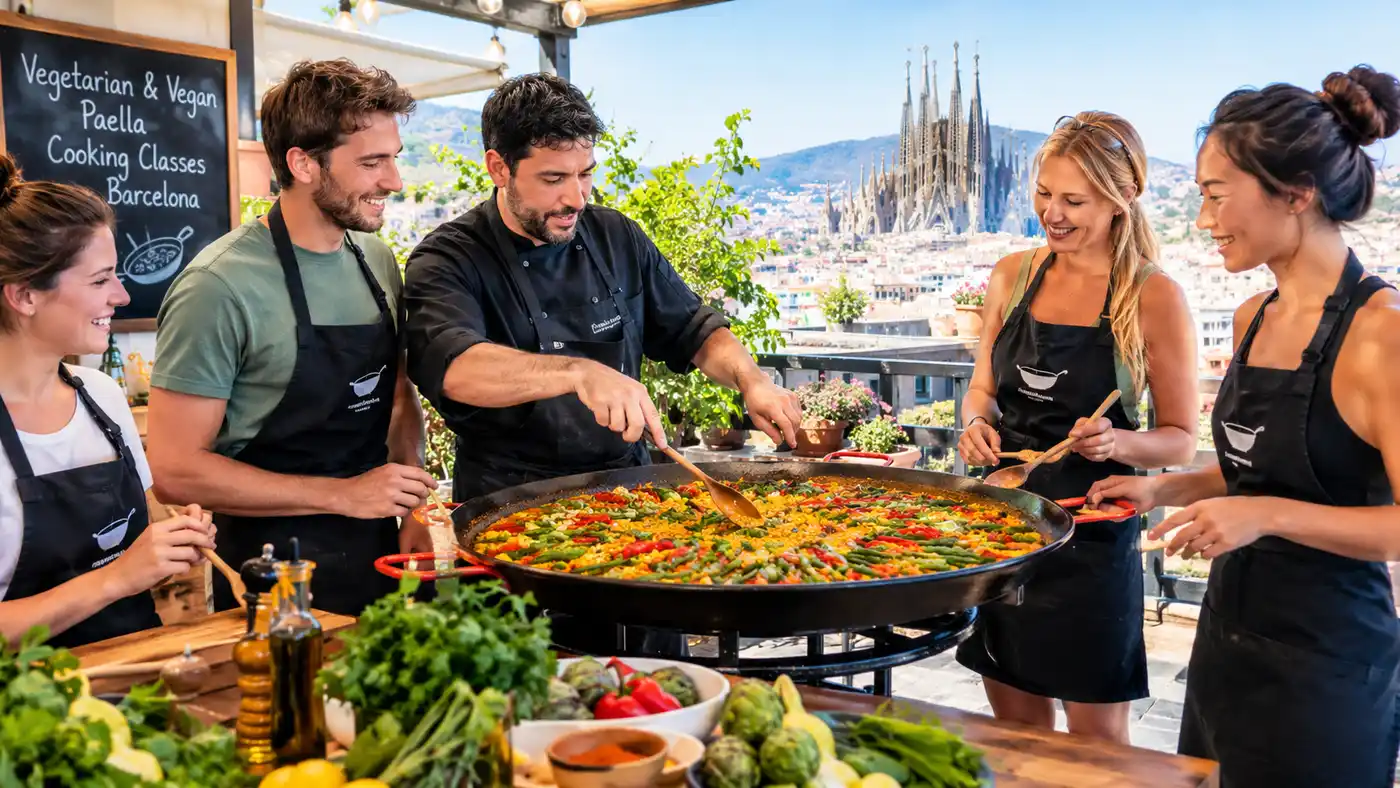
Vegetarian and Vegan Paella Cooking Classes in Barcelona
Spain is famous for jamón and seafood, so travelers who avoid meat often expect to spend their trip dodging pork fat and picking tuna out of mixed salads. Walking down Carrer de Ferran on my first night in town years ago, I remember smelling toasted garlic and roasted peppers drifting from half the doorways and wondering if any of it was safe to eat. A good vegetarian paella cooking class barcelona solves that puzzle fast, showing you that authentic Spanish rice does not rely on chicken wings or squid ink to deliver deep flavor.
Catalonia has an incredible garden culture. The fertile plains around Lleida and the Baix Llobregat delta produce some of the sweetest artichokes, tender leeks, and plumpest beans in southern Europe. When you learn to make a paella de verduras from an instructor who takes local produce seriously, you discover that vegetables are not a substitute or an afterthought in this dish. They are the entire point.
Book your paella cooking class barcelona experience:
Why a Vegetarian Paella Cooking Class Barcelona Experience Changes Your Cooking
Most tourists assume paella is always loaded with shellfish. In reality, traditional Valencian paella originally featured land animals and garden beans, and rural cooks regularly leaned on whatever vegetables grew near their plots. Making a meatless version is not modern fusion. It is old farmhouse logic.
The secret of any great rice dish lies in two foundations: the sofrito and the broth. In an average class, you spend the first 35 minutes chopping onions, grating ripe plum tomatoes, and peeling mountain garlic. You learn to fry these ingredients slowly in good extra virgin olive oil until the mixture turns a dark, jam-like mahogany. If you rush this step, your rice tastes watery. Take your time, let the sugars caramelize, and you build a savory base so rich that nobody misses the chorizo.
Note: Some cooking schools claim their standard group classes are plant-friendly, but they end up ladleing pre-made chicken or fish stock over everyone's rice. Always confirm ahead of time that your workstation uses a dedicated pot of house-made vegetable broth simmered from scratch.
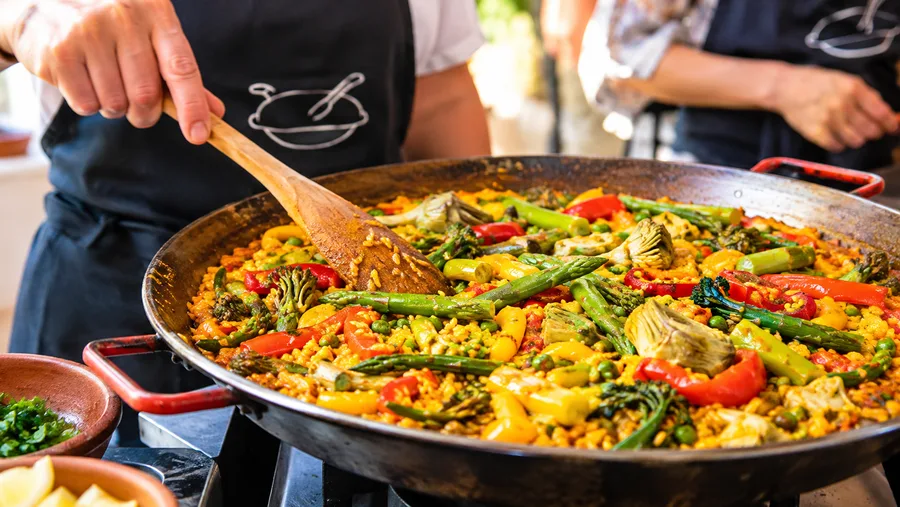
Broth makes or breaks vegetable paella. In a dedicated class, instructors teach you how to extract body from roasted root vegetables, leek greens, dried mushrooms, and ñora pepper skins. Boiling a few carrots in water for 10 minutes gives you yellow water, not stock. A skilled chef shows you how to roast trimmings first, creating an amber broth with enough mouthfeel to coat the Bomba rice grains.
You also learn how to treat vegetables as structural elements. Zucchini turns to mush if you toss it in too early, while fresh butter beans and artichoke hearts need prolonged simmering to soften completely. Timing each addition transforms what could be a soggy garden stew into a layered, textural marvel.
What Happens in the Best Vegetarian Paella Cooking Class Barcelona Studios
A memorable workshop rarely starts at the stove. Instead, you usually meet your group outside a bustling market hall, sometimes Santa Caterina with its wavy mosaic roof, or La Boqueria off the Rambla. Strolling market aisles with a local chef beats any solo trip because they steer you past tourist traps straight to specialized vegetable stalls. If you book a paella cooking class with Boqueria market visit, you get to inspect seasonal produce up close, smelling bruised rosemary branches and picking out the flat green beans known locally as ferraúra.
Back in the teaching kitchen, you slip on an apron and grab a heavy knife. The pace is relaxed. You will likely prep your own station while sipping a crisp Catalan white wine or a vermouth on tap.
- Bomba rice: a short, pearly grain capable of absorbing up to three times its volume in liquid without bursting open.
- Dried ñora peppers: round, sweet sun-dried peppers that provide earthy depth and a dark brick color without any spicy heat.
- Garrofó beans: giant, creamy white beans from the Valencia region that add a rich, buttery texture to the pan.
- Saffron threads: real stigmas lightly crushed and bloomed in warm broth, giving floral aroma and that unmistakable golden glow.
- Seasonal vegetables: fresh violet artichokes in winter, sweet padrón peppers and runner beans in spring, wild chanterelles in autumn.
The instructor explains the mechanics of wide, shallow carbon steel pans. Heat distribution behaves differently than with stainless steel or nonstick skillets. You learn to listen. An experienced paellero knows what the pan needs just from the sizzle frequency, shifting the flame from a steady boil to an intense crackle at the finish.
Comparing Vegan Paella Cooking Class Barcelona Options
Finding the right class depends on your travel style and how strict your diet is. Some travelers want an intimate private kitchen where they can ask fifty questions about regional olive oils. Others prefer a loud, communal dinner party with bottomless drinks where cooking is half the entertainment. Knowing what each studio offers keeps you from ending up in an awkward setting.
| Class Style | Duration | Average Cost | Group Size | Dietary Focus |
|---|---|---|---|---|
| Market Tour & Cooking Lab | 4.5 hours | €82 | 8 to 12 people | Separate vegan stations available |
| Intimate Atelier Workshop | 3 hours | €95 | 4 to 6 people | 100% plant-based menus on request |
| Evening Social Cookery | 2.5 hours | €54 | 14 to 18 people | Vegetarian friendly, high energy |
| Private Chef Masterclass | 3.5 hours | €140 | 1 to 4 people | Fully customized vegan recipes |
Studio locations vary across the city. Some operate out of converted textile lofts in Poblenou with high ceilings and industrial exhaust hoods. Others tuck into historic stone basements in the Gothic Quarter or sunny apartments in Gràcia. If you have mobility concerns, look for ground-floor spaces, as many historic buildings lack elevators.
A true paella and sangria cooking class in Barcelona often blends technique with festive appetizers. While the rice simmers undisturbed, instructors usually show guests how to whip up traditional tapas like pan con tomate, fried padrón peppers sprinkled with flaky salt, or a vegan alioli made without egg whites using garlic, salt, and olive oil.
Book your paella cooking class barcelona experience:
Mastering the Socarrat Without Meat or Seafood Fats
Every paella fanatic chases the socarrat. That caramelized, deeply toasted bottom crust of rice marks the dividing line between amateur cooking and kitchen mastery. In meat or fish paellas, rendering animal fat helps fry the bottom grains during the final minutes. In a vegan paella cooking class barcelona cooks must rely entirely on vegetable oils, residual sugars, and flame management.
It takes courage to make socarrat. Your instincts tell you to turn down the heat or stir the rice. Stirring is the cardinal sin of Spanish rice cookery because it releases starch and leaves you with risotto. You must leave the pan alone.
Pro tip: When the liquid disappears from the surface, listen closely for a dry, crackling sound and smell for nutty toastiness; drizzle a tablespoon of oil around the pan rim to help the bottom layer crisp evenly without scorching.
You test the bottom with the back of a spoon. If the grains slide around, the crust has not formed yet. If the spoon meets firm resistance and you hear a distinct frying snap, you are seconds away from success. Take the pan off the burner immediately and cover it with clean tea towels for 5 minutes. The steam distributes heat through the top layer while the bottom releases clean from the steel.
Scraping up that crunchy, golden-brown crust with a wooden spoon and tasting it with a dab of garlicky sauce is easily one of the best moments you will have in a Barcelona kitchen. Honestly, once you nail the technique at home on a standard gas burner, you will never look at leftover takeout rice the same way again.
Practical Tips for Booking and Dietary Requests
Barcelona takes food seriously, but small misunderstandings still occur with dietary labels. The concept of pure veganism has grown quickly across the city over the last decade, yet older Spanish cooks sometimes assume vegetarian simply means no red meat. Tuna and anchovies still slip into traditional salads if you do not clarify your preferences.
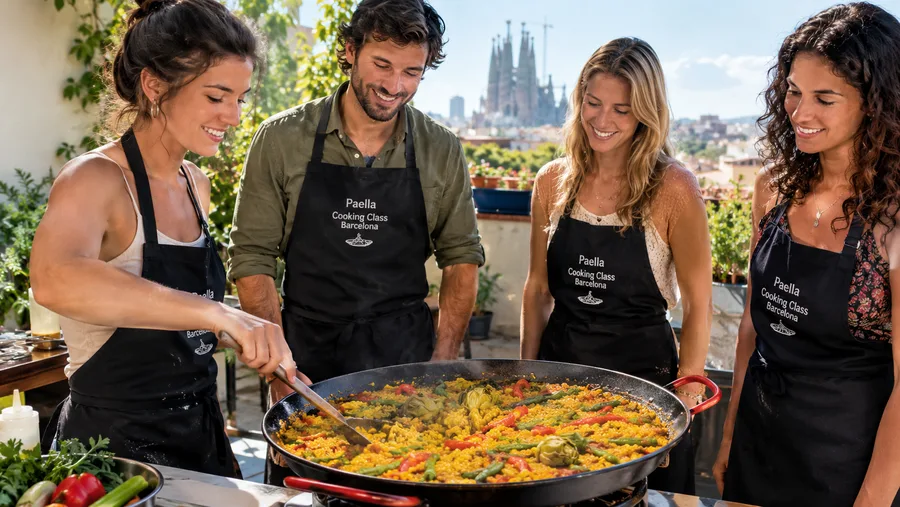
When booking, reach out directly rather than leaving a quiet note on a checkout form. Clear communication avoids surprises when you walk in the door.
- Dedicated pans: verify that your rice cooks in its own individual pan rather than a giant communal dish shared with meat-eaters.
- Wine certifications: mention in advance if you require certified vegan wines for the sangria and dinner service.
- Allium sensitivities: let the school know if you cannot eat garlic or onions, as a Spanish sofrito relies heavily on both.
- Recipe booklets: check whether the school provides printed or digital copies of the recipes scaled down for home kitchens.
I think the best classes are the ones that take place in the morning. Markets are bursting with fresh arrivals, the chefs are well-rested, and you finish cooking right around 2:00 PM, which lines up with the traditional Spanish lunchtime. Cooking an evening paella can be fun, but eating a massive portion of carbohydrate-rich Bomba rice at 10:00 PM before walking back to your hotel can feel heavy on your stomach.
Pack comfortable flat shoes. You will stand on concrete, tile, or hardwood floors for at least two hours while dicing ingredients and monitoring pan temperatures. Leave your favorite white shirt in your suitcase too, because saffron and pimentón stains do not wash out easily if you get splashed while deglazing your sofrito.
Frequently Asked Questions about vegetarian paella cooking class barcelona
Can vegans attend regular paella classes or do I need a specialized workshop?
Many top culinary schools in Barcelona happily accommodate vegans in mixed groups by giving you an individual 30 cm pan and plant-based stock. However, a specialized plant-based workshop offers richer insights because the entire lesson focuses on building umami from vegetables, dried chilies, and mushrooms instead of simply removing meat.
Is Bomba rice naturally gluten-free?
Yes, authentic Spanish short-grain rice like Bomba, Senia, and Bahia is naturally free from gluten. You should still confirm that your instructor uses gluten-free tamari or verified spice blends, as cheap commercial pimentón or bouillon powders can occasionally contain anti-caking wheat agents.
How far in advance should I book my spot?
During peak travel season from May through October, reputable classes sell out roughly two to three weeks ahead. Because small kitchens keep student caps between 8 and 12 people to ensure hands-on burner time, booking at least 14 days before your arrival date is wise.
Quick Reference
- Typical cost: €55 to €95 per person
- Session length: 3 to 4 hours
- Best season: Year-round (spring for beans, winter for artichokes)
- Language: English (Catalan/Spanish on request)
- Location: Gothic Quarter, El Born, and Eixample
Book your paella cooking class barcelona experience:
The Bottom Line
Learning to cook a plant-based Spanish feast gives you a skill you can pull out in your own kitchen for decades. When you stand over a wide steel pan in a Barcelona studio, smelling sweet garlic, roasted ñoras, and woodsy rosemary, you realize that authentic Iberian food does not belong exclusively to ham carvers and fishmongers. Reserve your spot early, come with an empty stomach, and prepare to scrape every last grain of crispy socarrat off the bottom of the pan.
Read more about paella cooking class barcelona.