Barcelona Paella Cooking Class with Boqueria Market Visit
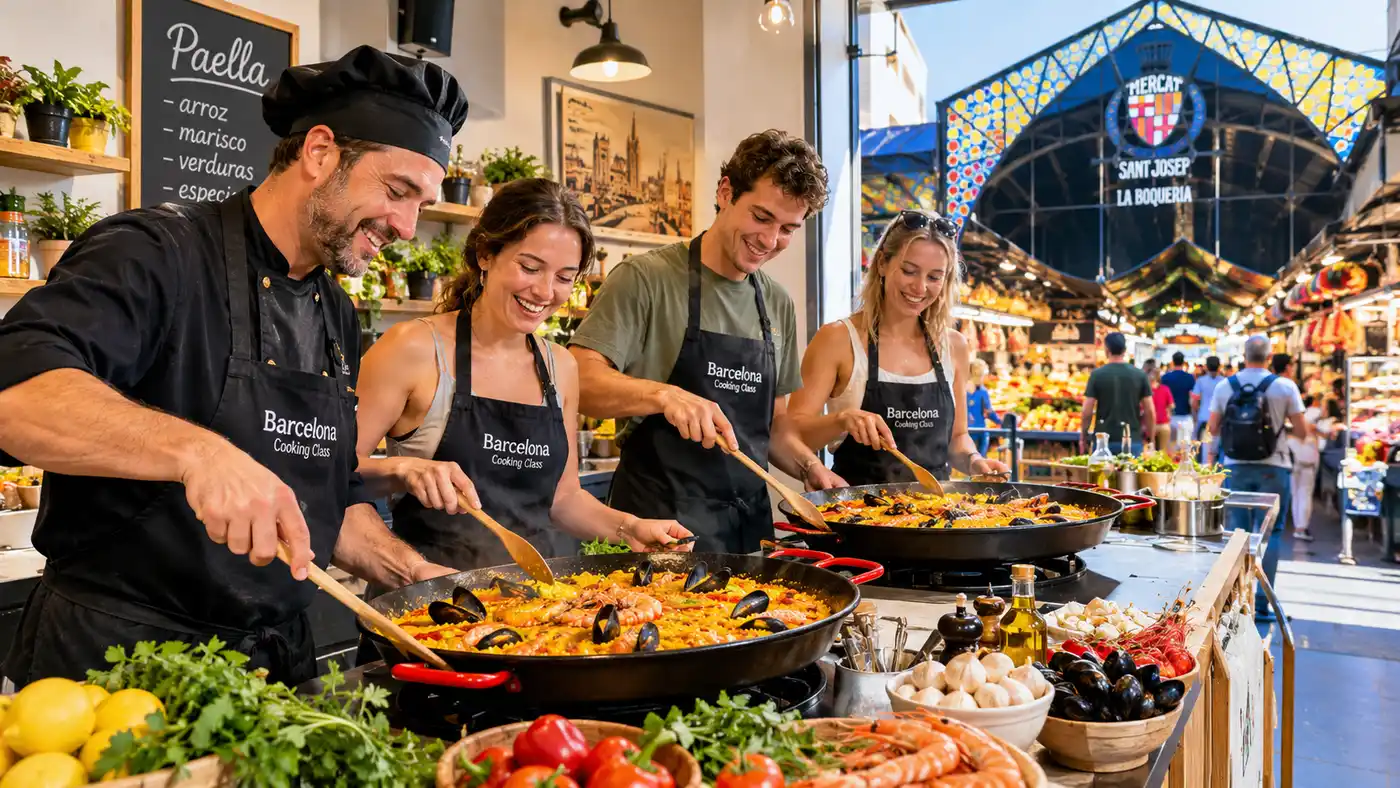
The smell hits you first around 9:45 in the morning. Salt, damp ice, sliced melon, and cured ham fat hanging thick in the Mediterranean air. Most tourists walk through the ornate wrought-iron arch of Mercat de Sant Josep off the promenade just to take pictures of fruit juice cups, but showing up for a barcelona paella cooking class with la boqueria market visit gives you a completely different purpose. Instead of wandering aimlessly past camera-wielding crowds, you trail behind a chef who navigates the slippery tiled aisles with absolute authority, stopping at specific vendors to inspect the day's catch.
Cooking paella in Spain often feels wrapped in fierce dogma. Ask three locals from the Mediterranean coast how to make it and you will hear four conflicting arguments about water minerals, rice strains, and whether rosemary belongs anywhere near the pan. Going straight into the market stalls to gather live shellfish and seasonal vegetables strips away the mystery. You see the raw ingredients before they hit the pan, learn which cuts of meat provide the savory foundation, and realize that genuine Spanish cooking relies far more on patient technique than exotic spice blends.
What Happens During a Barcelona Paella Cooking Class with La Boqueria Market Visit
Your day generally begins right outside the market entrance along Las Ramblas. The chef gathers a small group of around 8 to 12 people, hands out canvas market bags, and walks straight past the polished front stalls. Tourist traps dominate the front perimeter with five-euro candies and pre-cut fruit cups that have sat on melting ice since dawn. The real food lives deep in the belly of the hall.
Back near aisle seven, where rubber-booted fishmongers yell over dripping metal counters, the culinary lesson begins. You watch how a trained eye examines red prawns from Palamós. Fresh ones have firm, translucent bodies and eyes that look like shiny black beads, not cloudy grey marbles. You learn to touch cuttlefish to check for springiness and why small, rock-dwelling fish yield far more flavorful broth than large, mild white fish. The chef picks up a paper cone of tiny cockles, trades quick Catalan jokes with a butcher who has worked the exact same stall for 33 years, and pays with crumpled bills from a leather pouch.
Walking the market this way feels grounding. You are not a spectator staring at dead sea creatures behind glass. You are shopping for your lunch.
Pro tip: Wear closed-toe shoes with good grip because the wet tiles around the Boqueria seafood counters stay slick with ice melt all morning.
Market stalls in Barcelona operate on seasonal rhythms that dictate what ends up in your workshop pan. Depending on whether you visit in May or October, your chef might pause by the vegetable vendors to grab tender artichokes, flat green beans called bajoqueta, or wild mushrooms harvested from the pine forests outside the city.
- The fishmongers: Look for whole monkfish and squid with skin still dark and mottled rather than bleached white by sitting too long in freshwater.
- The spice merchants: Real Spanish saffron should look like tangled, deep crimson threads without yellow filler stems, giving off an earthy, tobacco-like aroma.
- The jamón specialists: Cured ham stalls let you taste thin shavings of acorn-fed ibérico to show how clean, melting fat coats your tongue differently than commercial serrano.
- The vegetable tables: Fresh tomatoes destined for the sofrito base must be soft, ripe, and slightly acidic rather than firm greenhouse varieties.
Book your paella cooking class barcelona experience:
Inside the Kitchen: Tapas, Sangria, and Rice Technique
Leaving the noise of the market behind, you walk through the narrow alleyways of El Raval or the Gothic Quarter to reach the teaching kitchen. Most schools occupy vaulted, stone-walled apartments or bright street-level lofts with long stainless steel workstations. Aprons go on, hands get washed, and wine bottles open almost immediately.
Before touching the rice, you usually tackle Spanish appetizers. You rub halved cloves of garlic and soft tomàquet de penjar directly onto the rough crust of toasted country bread, dousing the crumb in green Arbequina olive oil and flaky sea salt. It takes less than two minutes to assemble, yet it tastes better than half the starters served at sit-down cafes down the street. Many classes pair this with a hands-on crash course in mixing drinks, which you can read about in our guide to paella and sangria cooking classes in Barcelona, where fruit maceration and garnishes turn cheap wine into something memorable.
Once everyone has a drink in hand and a small plate of padrón peppers or spicy patatas bravas, the main cooking event begins. An authentic barcelona cooking class market tour & paella workshop does not rush this part. The chef gathers everyone around a wide, shallow steel pan set over a double-ring propane burner.
The foundation of any good paella is the sofrito. This is not something you crank up high to get through quickly. Diced onions, garlic, and grated tomatoes simmer down gently in olive oil for 25 to 35 minutes until the water evaporates completely, leaving behind a thick, jammy paste that coats the back of a wooden spoon. If you rush the sofrito, your paella tastes thin and watery. If you caramelize it slowly until it turns the color of roasted mahogany, the pan develops an incredible, deep savoriness that carries the entire dish.
Note: Most cooking schools offer seafood, meat, or mixed variations, but if you have dietary restrictions, notify them when booking so the kitchen can prepare separate pans and vegetable broths.
Mastering the Science of Bomba Rice and Socarrat
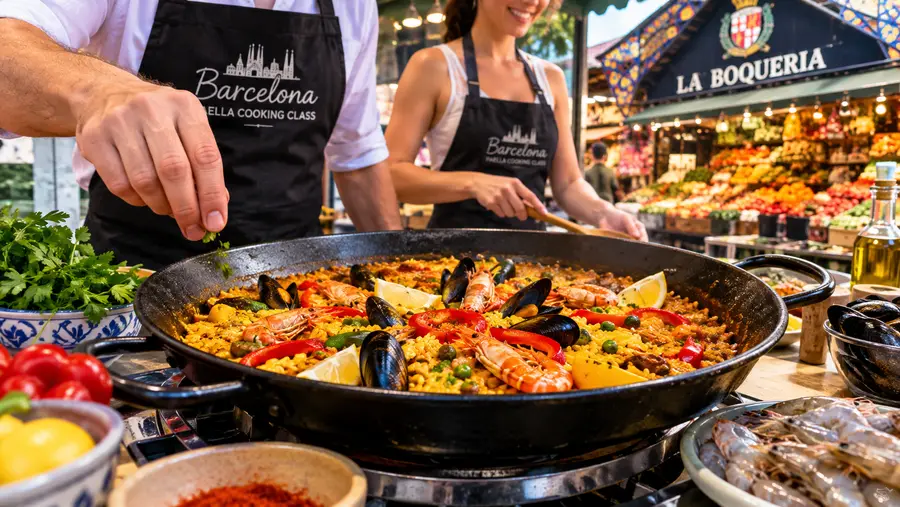
Rice selection makes or breaks this meal. A good barcelona cooking class paella boqueria teaches you never to substitute Italian Arborio or Asian jasmine rice for authentic Spanish short grain. Bomba rice from the wetlands of Valencia or the Ebro Delta acts like an accordion. It absorbs nearly three times its volume in hot broth without bursting into sticky starch, meaning your grains remain plump, separate, and toothsome.
The chef pours in the boiling fish or chicken stock, infusing it with hand-crumbled saffron threads that bloom into a bright orange-gold dye. Then comes the step that shocks most home cooks: once you stir the rice across the pan to distribute it evenly across the bottom, you never stir it again.
Stirring releases starches and turns your lunch into risotto. Leaving the pan completely undisturbed lets the rice absorb the broth through gentle simmer bubbles. In the final three minutes, the cooking team turns the gas flame up to medium-high. You listen intently to the bottom of the pan. The sound shifts from a wet, liquid bubbling to a sharp, crackling sizzle.
- Listen closely: The crackle means the liquid has fully evaporated and the bottom layer of starch and fat is frying directly against the metal pan.
- Use your nose: You want a rich, toasted nutty smell, not the bitter smoke of charred carbon.
- Do not scrape early: Let the pan rest off the heat for five minutes so moisture settles and the crispy crust loosens naturally.
- Serve from the pan: Authentic meals skip fancy ceramic plating; everyone uses large spoons to eat straight from the metal vessel.
That caramelized bottom crust is called socarrat. Finding that sweet spot between golden-crisp perfection and burnt disaster requires nerve, and having an instructor standing right behind your shoulder pointing out the sound changes makes all the difference.
Book your paella cooking class barcelona experience:
Choosing the Right Workshop Format
Not every authentic barcelona cooking class: market tour & paella workshop follows the exact same schedule. Some run early in the day and finish with lunch around 2:00 PM, which matches the traditional Spanish eating hour. Others start in the late afternoon, though you should remember that the Boqueria seafood stalls shut down by mid-afternoon, so evening sessions usually rely on pre-purchased fish or visit dry goods stalls instead.
Class size matters a lot here. A crowded room of 20 travelers means you might only get to chop one onion or toss two prawns into the pan while someone else does the actual cooking. Smaller groups give every person their own prep station and plenty of time to ask questions about technique. For details on price tiers and booking deposits across different neighborhoods, check our breakdown of paella cooking class Barcelona prices and reservations.
| Class Style | Average Cost | Duration | Group Size | Market Visit Included |
|---|---|---|---|---|
| Standard Morning Workshop | €55 - €70 | 3.5 to 4 hours | 10 - 14 people | Yes (full seafood and produce) |
| Evening Cooking Session | €60 - €75 | 3 hours | 10 - 14 people | Limited (specialty dry stalls) |
| Small-Group Premium | €85 - €115 | 4 hours | 6 - 8 people | Yes (tastings at 4+ stalls) |
| Private Chef Workshop | €130 - €190 | 4 to 5 hours | 2 - 6 people | Yes (customized menu stops) |
Private classes are undeniably pricier, but if you travel with a family or celebrate an anniversary, having the kitchen to yourself lets you dictate the menu. You can demand a black ink arroz negro studded with tender baby squid and homemade garlic alioli, or stick to a classic Valencian rabbit and bean combination without negotiating with strangers.
What to Expect from a Barcelona Paella Cooking Class with Market Visit Tapas & Sangria
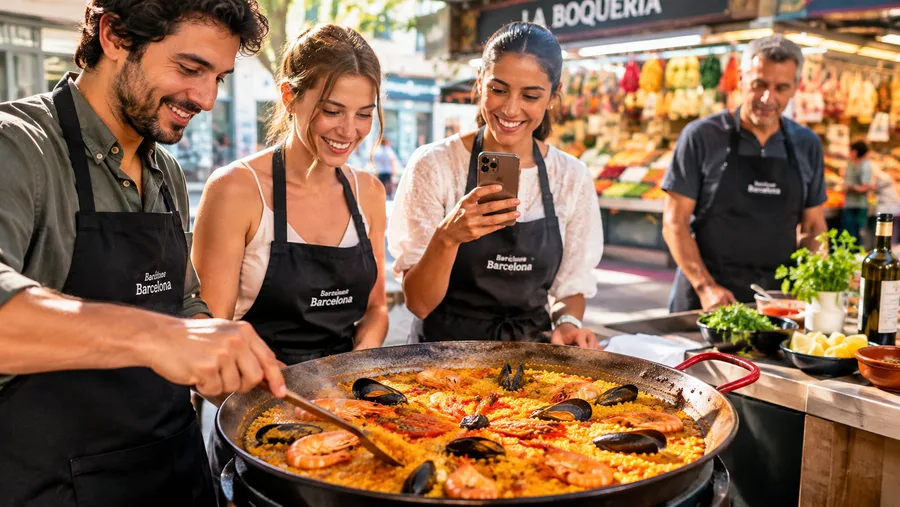
The social atmosphere makes these half-day classes fly by. A typical paella cooking class las ramblas & boqueria market in barcelona brings together solo travelers, couples on vacation, and groups of friends from completely different corners of the globe. Sharing a chopping board over glasses of Catalan garnacha breaks down social walls surprisingly fast.
You spend the first hour on your feet moving through crowds, the next two hours prepping and simmering, and the final hour sitting at a long wooden dining table. The kitchen staff sets out the finished dishes family-style alongside bowls of freshly whipped alioli. Tasting a paella you built from raw market components an hour earlier is immensely satisfying. The rice tastes rich, heavily scented with the broth you simmered, while the bottom crust crunches under your fork without leaving a burnt aftertaste.
Most schools send you home with recipe sheets by email, though honestly, the biggest takeaway is not the measurement list. It is the muscle memory. You learn how hot the pan needs to be, how deep the sofrito color must get, and how to stop yourself from poking the rice with a wooden spoon every five seconds.
Practical Tips for Your Market Tour and Cooking Day
A few small logistics can make your morning run much smoother. Booking your spot at least two weeks ahead during peak summer months from June through September is practically mandatory, as reputable schools sell out daily.
- Monday warning: Local fishermen do not fish on Sundays, meaning the Boqueria seafood section is mostly closed on Monday mornings; book Tuesday through Saturday for the best fish displays.
- Watch your belongings: The mouth of the market off Las Ramblas attracts talented pickpockets; keep your phone and wallet in zipped internal pockets during the tour.
- Arrive hungry: Between market samples, three different tapas, bread with tomato, sangria, and a heavy plate of rice, you will not need dinner until late in the evening.
- Ask for broth tips: The secret behind every great Spanish restaurant is their fumet (fish stock); make sure your chef explains their exact boiling time and fish head selection.
Navigating the city before the class is simple enough. The Liceu metro stop on the green L3 line lets you off directly outside the market gates. If your class meets nearby in El Born or the Gothic Quarter, leave yourself an extra 15 minutes to wander the cobblestone streets, as GPS signals notoriously bounce off the ancient four-story stone walls in those districts.
Frequently Asked Questions about barcelona paella cooking class with la boqueria market visit
How long does the entire market tour and cooking class take?
Most workshops last between 3.5 and 4 hours. You usually spend about 45 minutes walking through the market stalls, two hours prepping and cooking in the studio, and an hour sitting down to enjoy the meal with drinks.
Can children participate in the cooking class?
Yes, many schools welcome kids aged six and older. They can help mix sangria without alcohol, press garlic onto tomato bread, and wash vegetables, though an adult must supervise them around the gas burners.
Is La Boqueria too touristy for a real cooking class?
While the front entrance is packed with souvenir stands, the interior stalls remain genuine wholesale suppliers for high-end local restaurants. Visiting with a chef bypasses the tourist junk and connects you with generational merchants.
Quick Reference
- Location: Mercat de la Boqueria on Las Ramblas
- Average Price: €65 to €80 per person
- Typical Duration: 3.5 to 4 hours
- Best Days: Tuesday through Saturday
- Language: English (Catalan and Spanish available)
Book your paella cooking class barcelona experience:
My Take
Spending half a day on a cooking course might feel like a big chunk out of a tight vacation schedule, but it pays off immediately. Instead of sitting at another crowded cafe ordering questionable yellow rice that arrived frozen from a central commissary, you spend four hours learning how Catalans actually eat, shop, and argue about kitchen fires. Book an early morning slot, put on comfortable sneakers, leave your diet back at the hotel, and let yourself enjoy the sensory chaos of Barcelona's oldest food hall.
Read more about paella cooking class barcelona.